

Given recent dust ups, I wanted to lay out an operational level analysis of US military presence in Europe, covering the Cold War, GWOT and currently.
In brief:
America has the world’s largest defense budget (about a trillion dollars), leading to the world’s most capable military;
The American military has a trillion dollar budget because it is optimized to rapidly deploy anywhere in the world to defeat a middle power;
Despite the disparity in defense spending, the US contribution to near-peer continental warfare has always been much smaller than the European NATO countries; and
The spending gap between the US and the rest of NATO has mostly been eradicated over the last three years.
This first part will look at the difference between Continental and Expeditionary Warfare.

What is Expeditionary vs Continental Warfare
Crossing vast distances, and particularly crossing an ocean, to fight a war is called expeditionary warfare. Fighting a war in your homeland, or where you cross short distances over land is called continental warfare. Expeditionary warfare is a lot more expensive.
In both cases a logistical chain links the maneuver units in the field to the nation’s industrial base. Maneuver units are who directly engages with the enemy with the goal of taking and holding ground. In the Napoleonic era maneuver units were infantry and cavalry. In the modern ear maneuver units are infantry and armour.
Manoeuvre units are the main way to measure land combat power because they are what allows you to hold a front line and conduct offensives.
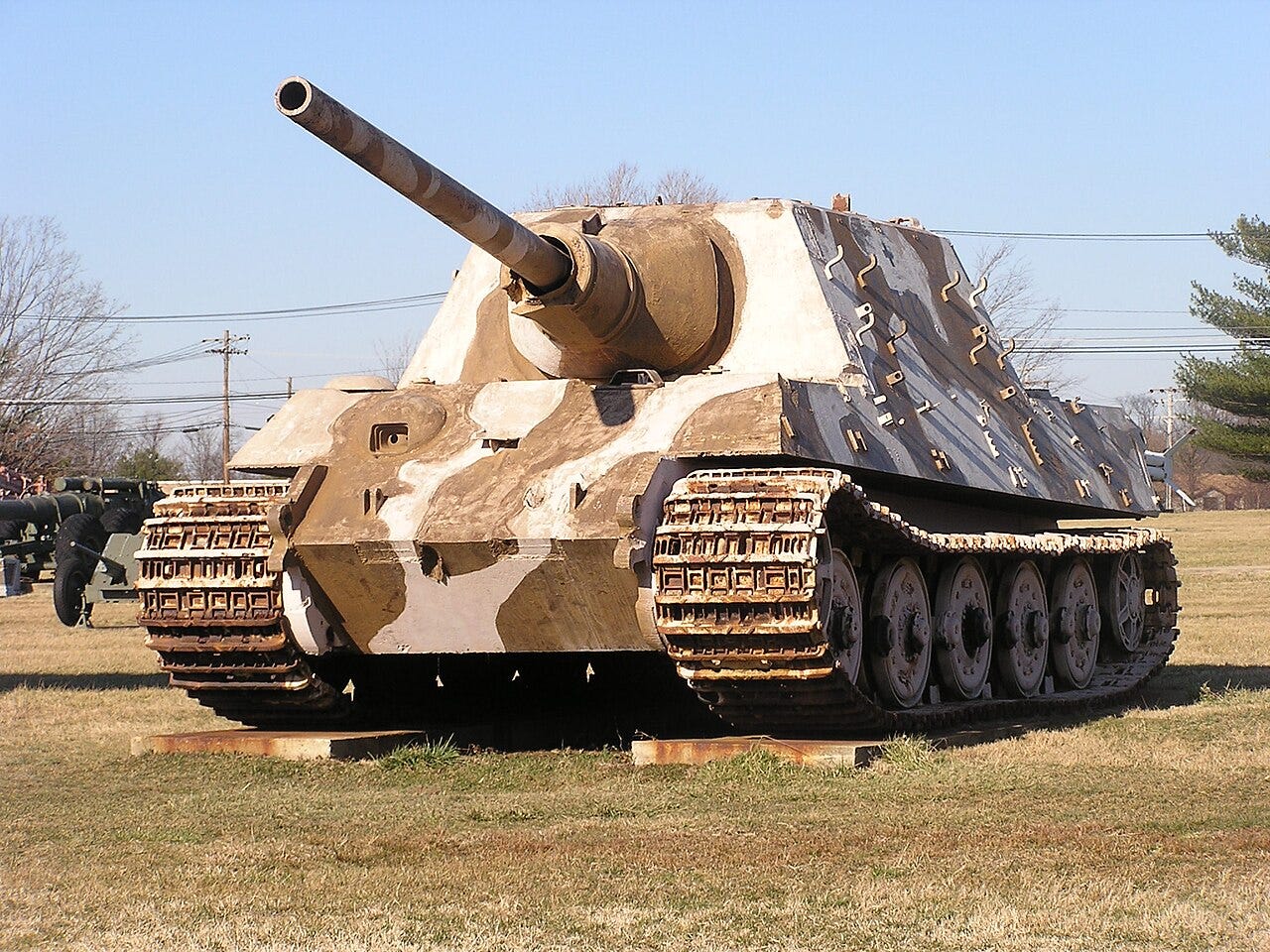
In continental warfare that logistics chain mostly consists of contracting with your nation’s railways. A tank built in Germany can be on the front line in the Soviet Union within a week. Major servicing and complicated repairs can be done back at the factory.
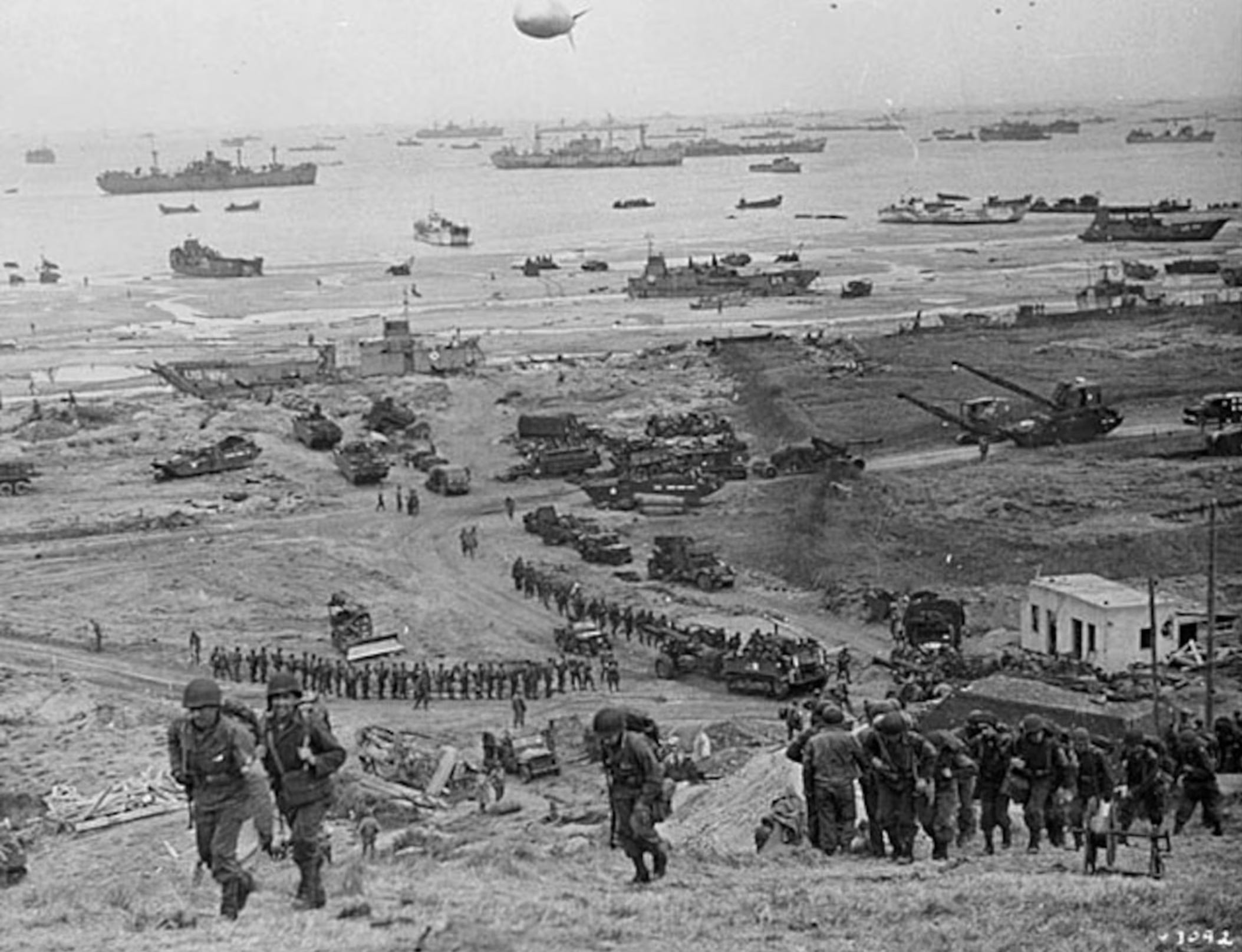
In expeditionary warfare that logistic chain is most of what the entire military is for. During the US island hopping campaign in the Pacific supplies loaded from depots in America tended to arrive on the front line 6-9 months later. Expeditionary warfare requires a larger air force and a much larger navy to protect this long logistics chain.
Continental vs. Expeditionary Warfare Example #1: WW2
As an example, in 1945 Germany and the USSR were fighting a continental war while the US and DUKE (Dominion, United Kingdom and Empire aka the British Empire) were fighting an expeditionary war. As the table below shows:
The continental armies had about 35% of their military manpower in manoeuvre units (the divisions);
The expeditionary armies had about 10% of their military manpower in manoeuvre units;
As a result, in 1945 the US military’s 12.2 million personnel resulted in 95 division sized manoeuvre units engaging with the enemy. The USSR’s similar 12 million of military personnel resulted in the equivalent of 323.1 US division sized manoeuvre units engaging with the enemy.

In other words, for the USSR as a continental army to get 4.2 million soldiers directly fighting the enemy required 7.8 million other service personnel in support. For America to have had the same number of soldiers directly fighting the enemy would have required a military of about 43 million soldiers.
Continental vs. Expeditionary Warfare Example #2: The UK vs Germany in the 2010s
Another example is to compare the UK and German militaries in the 2010s. During this period Germany maintained an army with the equivalent of about 7.5 mechanized and 3.5 light infantry brigades, for a total of 11 manoeuvre brigades. The UK maintained an army with the equivalent of 3 mechanized and 11 light infantry brigades, for a total of 14 manoeuvre brigades.
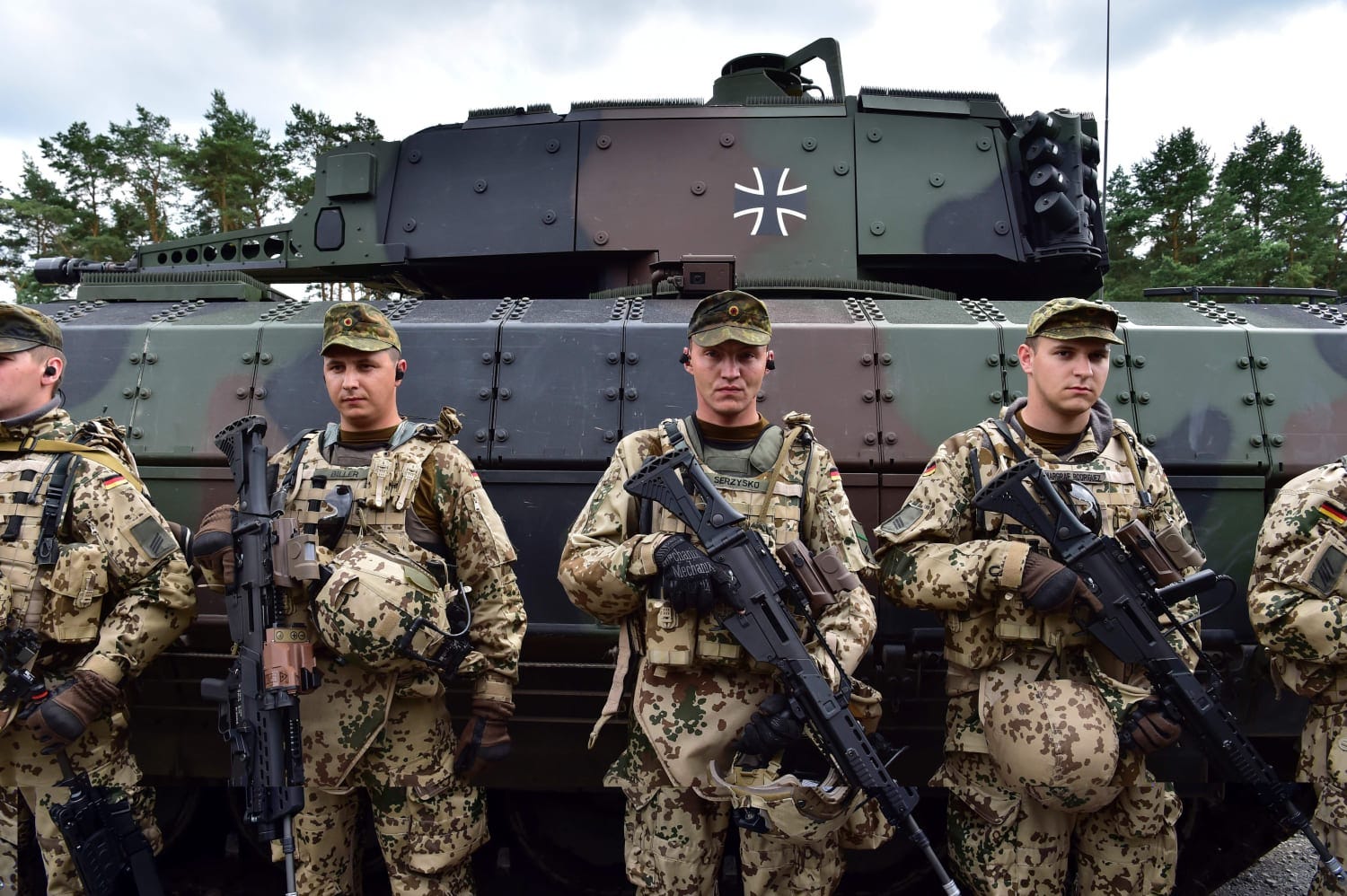
According to the British government, a light brigade costs slightly less than half as much as a mechanised brigade1 so in terms of costs the UK should have a smaller defence budget.

However, in the 2010s German defense spending was 62-84% of UK defence spending.
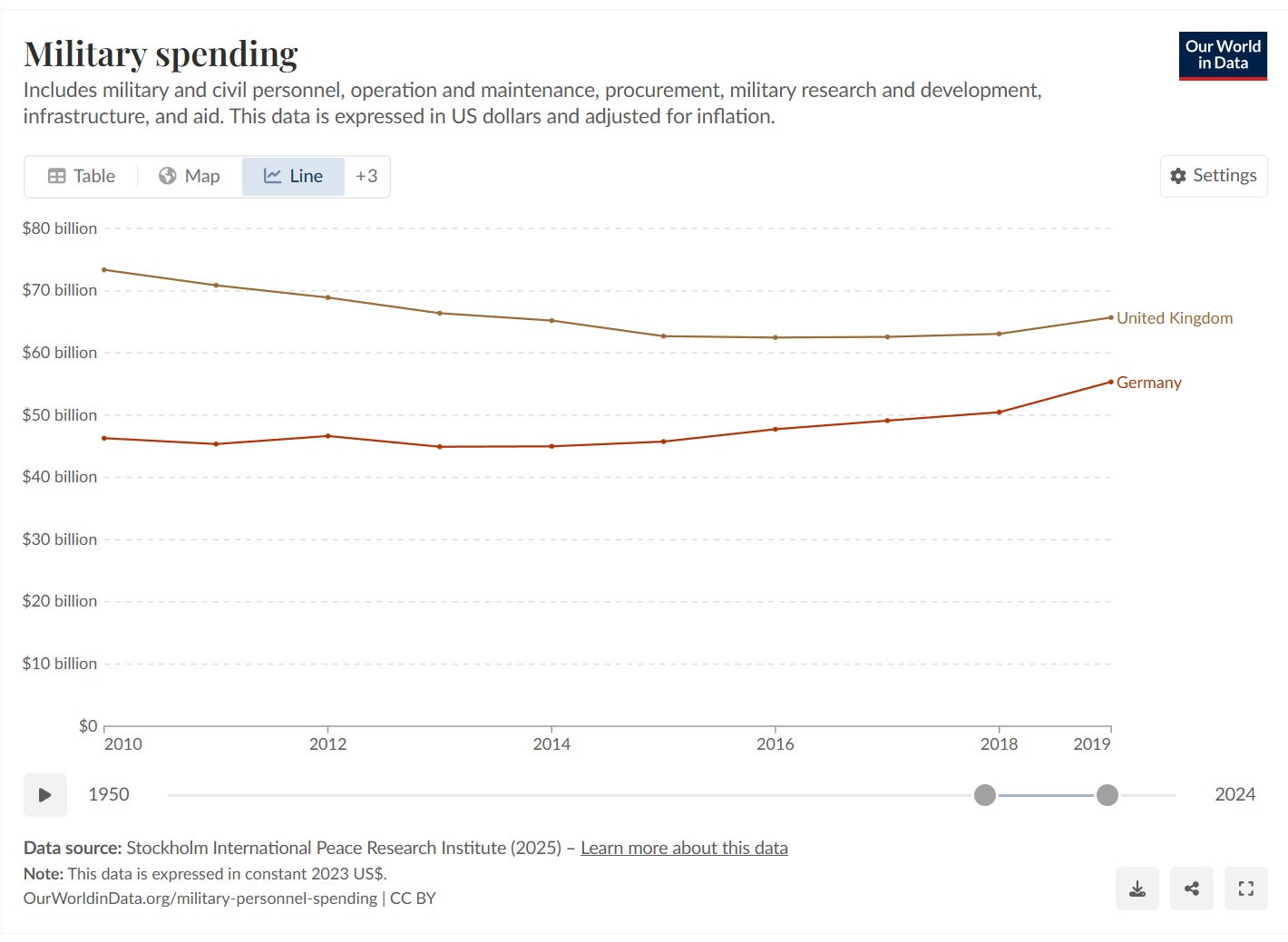
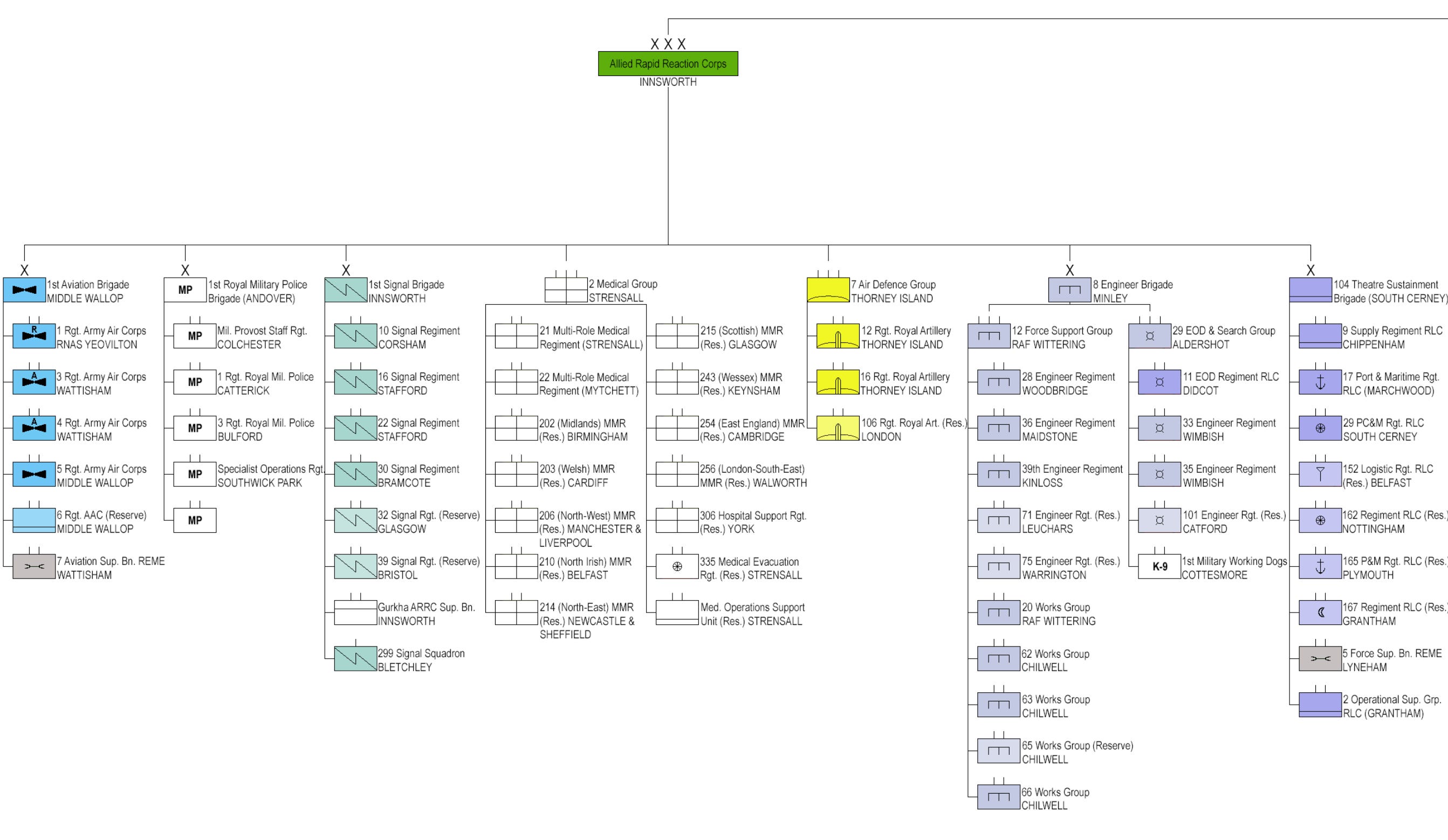
What drove Britian’s higher defence budget is the same reason she had such a large percentage of light brigades: Great Britain has an expeditionary army and Germany has a continental army. This means the British Army maintains about 15,000 to 20,000 Corps level troops to support overseas deployments under the Allied Rapid Response Brigade, including an Apache helicopter, Military Police, Signals, Medical, Air Defense, Engineering and Logistics brigade.
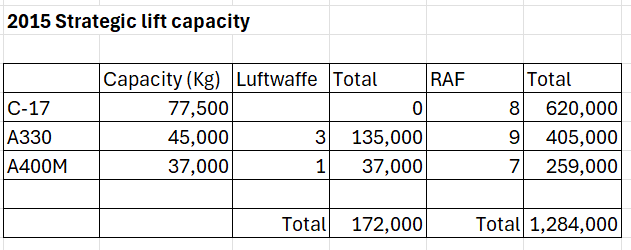
It also meant that in 2015 the RAF operated 24 strategic lift aircraft (C-17 Globemasters, A400Ms and A310s) to Germany’s 4 strategic lift aircraft. This gave the RAF nearly 7.5x the strategic lift capacity per sortie.
America: the Platonic Ideal of Expeditionary Warfare
It is not very controversial to say America has the most expeditionary focused military in world history. She has not had a neighbour who was a military threat since at least 1850. During that same period of time there have been no other great powers in the western hemisphere. This means every significant American conflict since the Civil War, both real and potential, has involved crossing an ocean to the far side of the world.

The closest historical equivalent is the British Empire of the 19th and early 20th Century. In that era Britain fought many small wars, and even a few medium sized wars, across the far flung regions of the globe. However, during this period her greatest rival and threat was always on the European continent.
The British Empire also operated on a shoestring when it came to land forces. She preferred to make a local alliance, finance the war and let the local ally do most of the fighting.
Rapid Deployment Forces
Currently there is a very short list of militaries capable of conducting expeditionary warfare. America’s expeditionary warfare capacity is in a different league. For rapid deployment the expeditionary capable countries have a rapid deployment force that can put an advanced element anywhere in the world withing 24-48 hours, the remainder of that force within 96 hours and a larger organisation within 1-2 weeks.
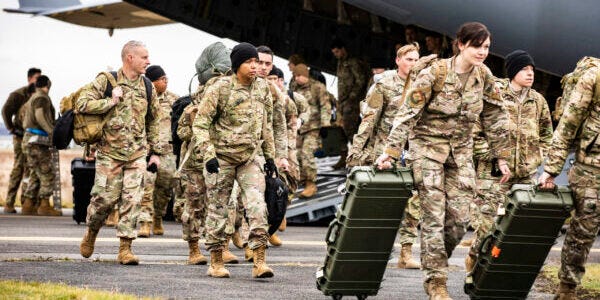
The rapid deployment capacities of the world’s major expeditionary militaries is as follows:
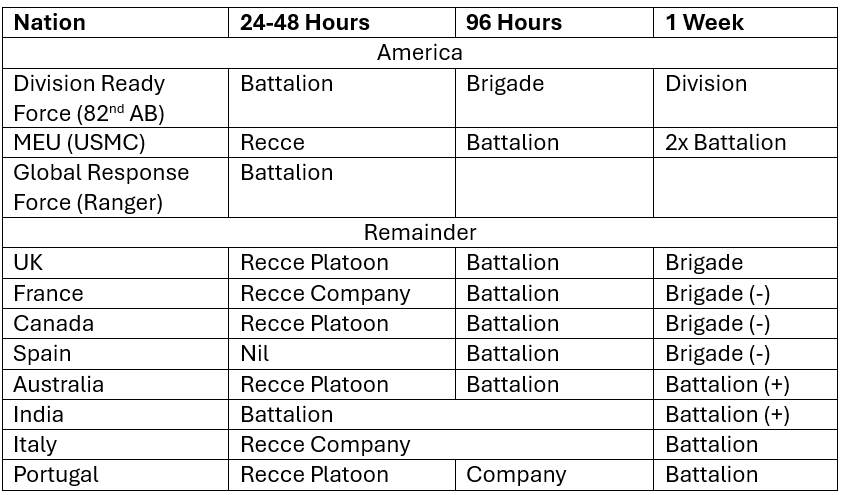
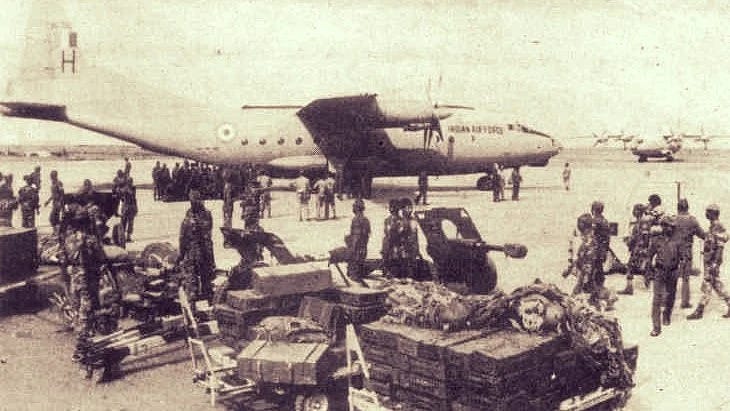
America is the only country, apart from India2, that can deploy troops anywhere in the world for combat operations within 24-48 hours. All the other expeditionary armies only have recce elements arriving in that timeframe. America is also at least one unit level up from everyone else on this table (ending in a division rather than a brigade).
Finally, the US is the only country on this list with depth and redundancy. Besides the 82nd Airborne Division the USMC maintains several Marine Expeditionary Units at sea at any given time. These are battalion sized marines units capable of conducting an amphibious landing almost anywhere in the world with a coastline within 72 hours. The Ranger Regiment can deploy a battalion anywhere in the world in 24-48 hours.
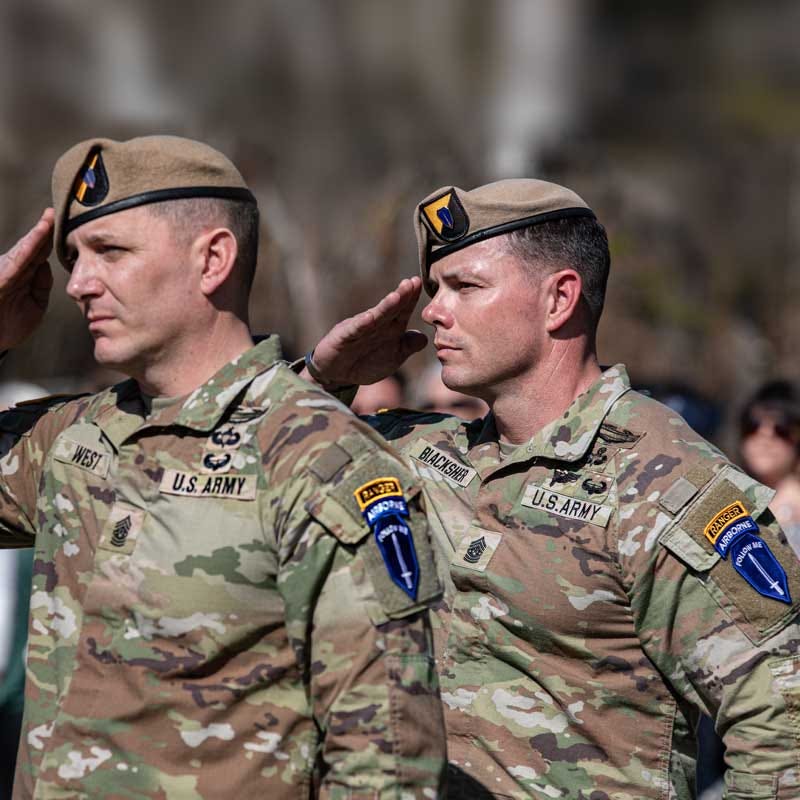
Finally, America has two additional rapid deployment divisions (101st Airborne and 10th Mountain) that can reconstitute the Division Ready Force if the 82nd Airborne deploys.
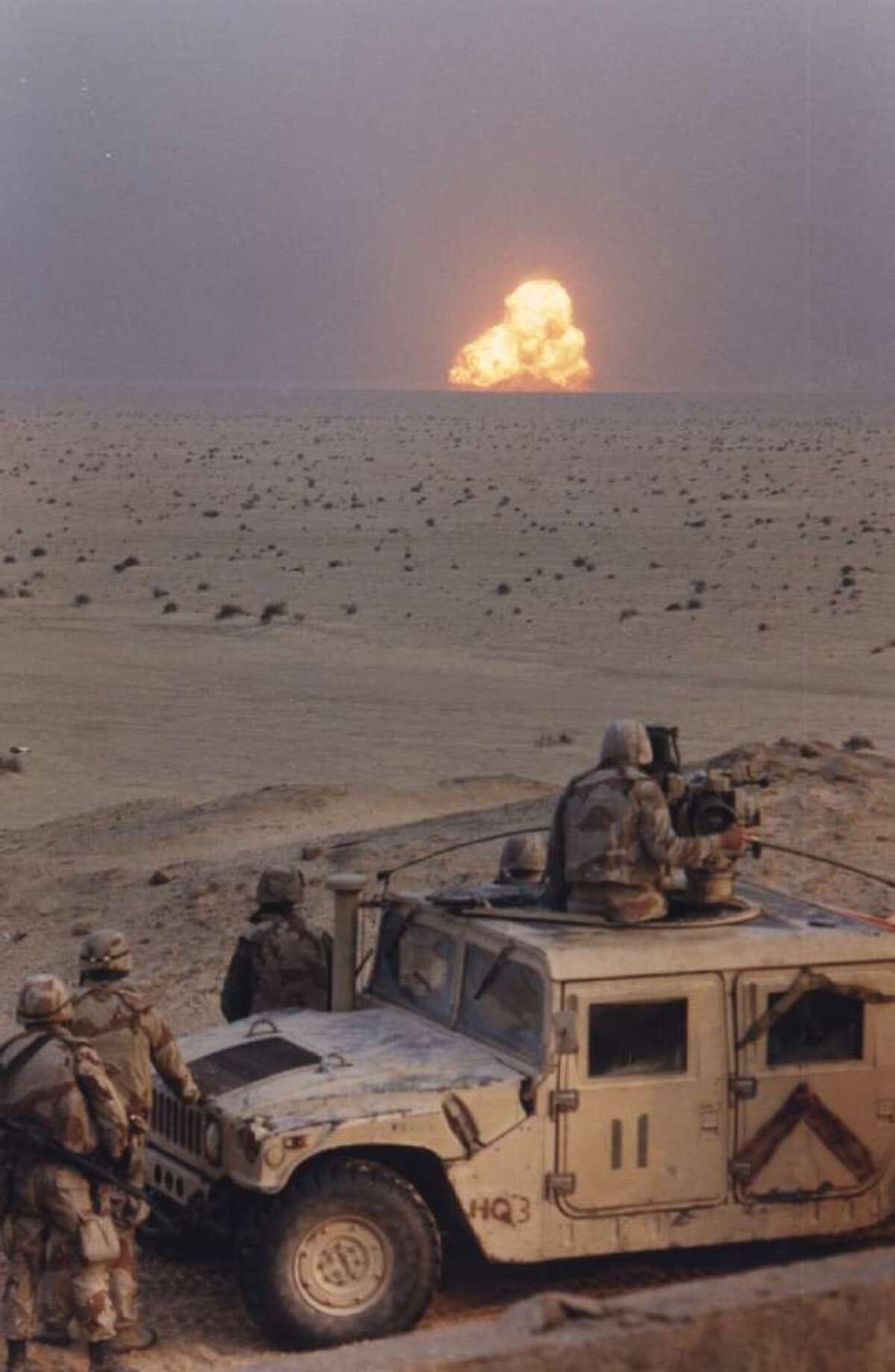
So assuming WW3 breaks out and America would deploy these rapid reaction forces, mostly by airlift, but the MEUs would go by sea. This force would have 2x battalions on the ground within 24-48 hours, and within a week would probably have 4x manoeuvre brigades (3x from the 82nd Airborne, a Ranger Battalion and 2x MEUs). These forces would be very vulnerable to any army with heavy equipment, something that was startlingly clear during the initial stages of Operation Desert Shield.
Therefore further follow on forces with heavier equipment would be needed in the 2 weeks to 1 month timeframe. These would be known as the follow on forces.
Follow on Forces - Army Prepositioned Stock
The US Army maintains several brigades worth of equipment in storage around the world, so that if can fly in troops to fall onto that equipment. This is an evolution of the REFORGER system from the Cold War, where about 1/2 the US units destined for NATO defense of Europe were stationed in America but would be flown in about once a year.
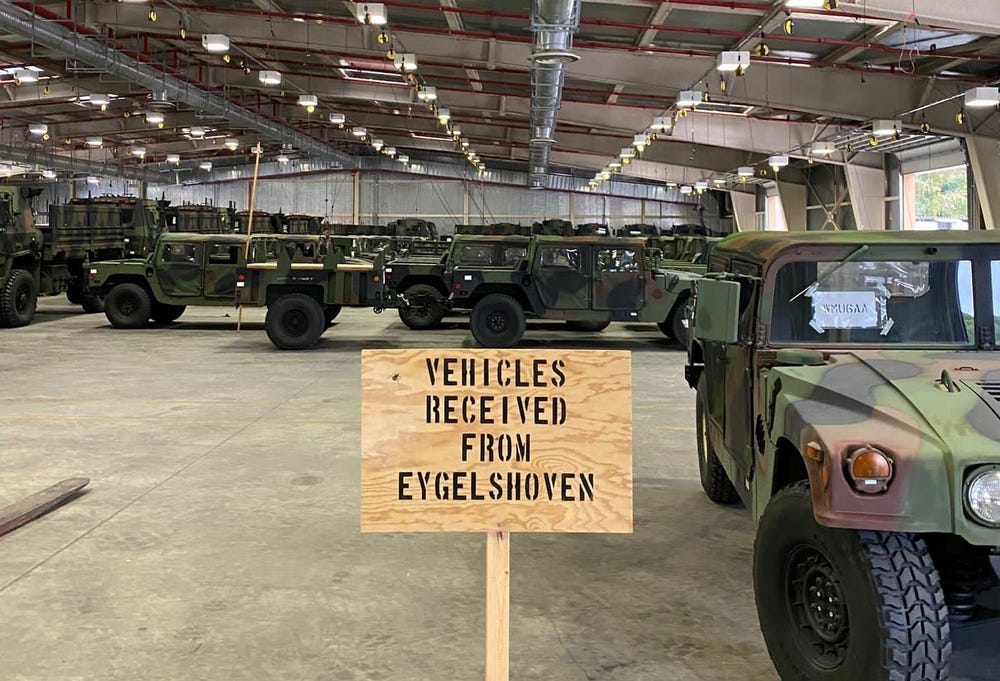
Currently those prepositioned equipment sets consist of:

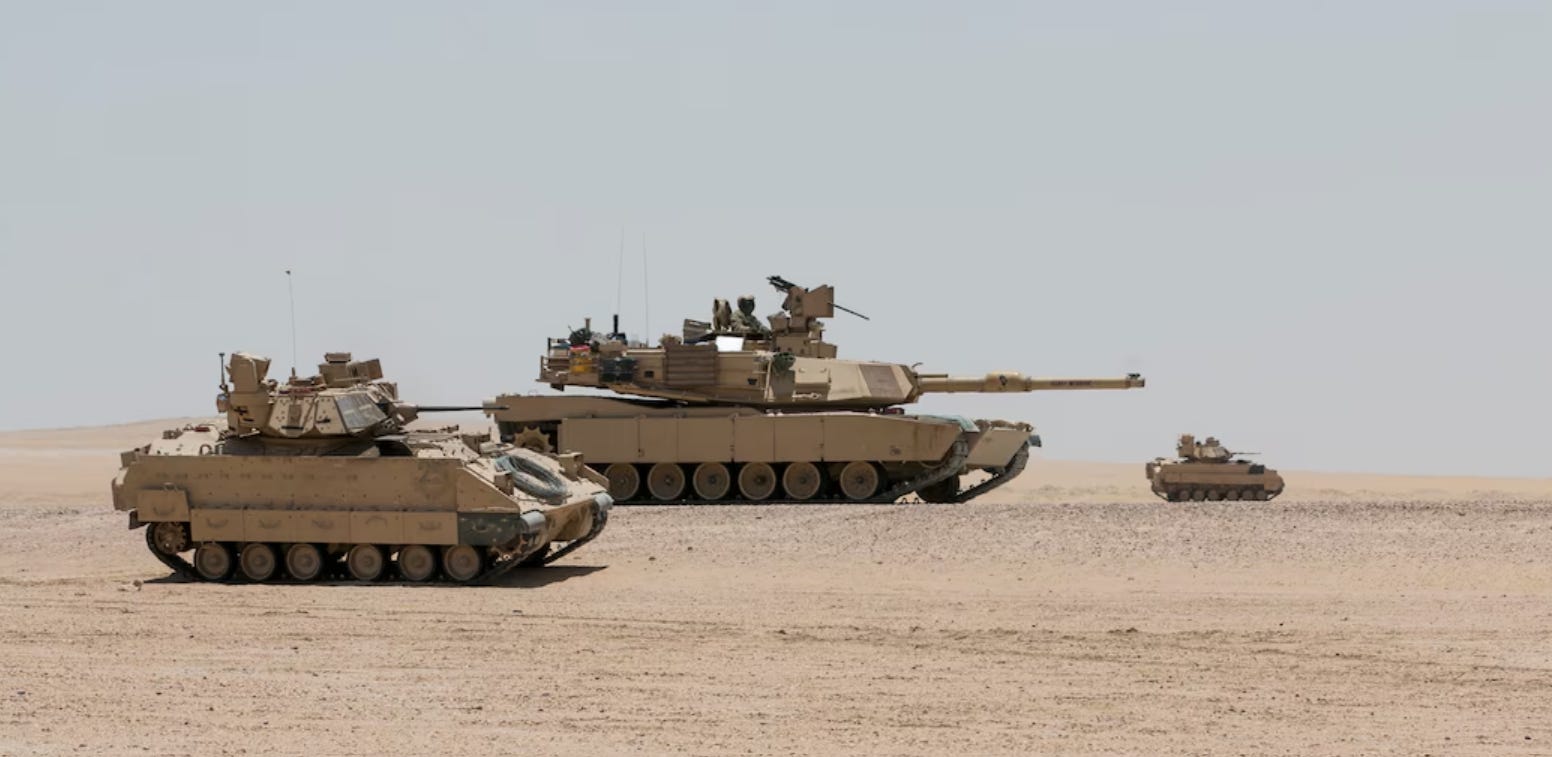
If WW3 breaks out in Europe then APS-4 and APS-5 would be harder to retrieve than just bringing units with their equipment from the United States. However, APS-2 and APS-3 would add 4x manoeuvre brigades to the US contingent within about the first month. Moreover, these would be Armored or Combined Arms brigades, equipped with Abrams tanks and Bradly IFVs.
Follow on Forces - Stryker Brigade Combat Teams
Largely as a reaction to Operation Desert Storm, where the 82nd Airborne division was left holding a plot of open desert the US identified the need for an air transportable brigade with enough armoured vehicles and heavy equipment to stand up to a mechanised enemy.
The Stryker brigades were stood up in 1999-2000 with an initial planned capability to deploy anywhere in the world within 96 hours via tactical transport aircraft like the Hercules. This was never accomplished in practice, and the equipment of the Stryker brigade has gotten heavier over time as a result of lessons learned. However, Stryker brigades can deploy anywhere in the world via the C-17 Globemaster III aircraft within 1-3 weeks.
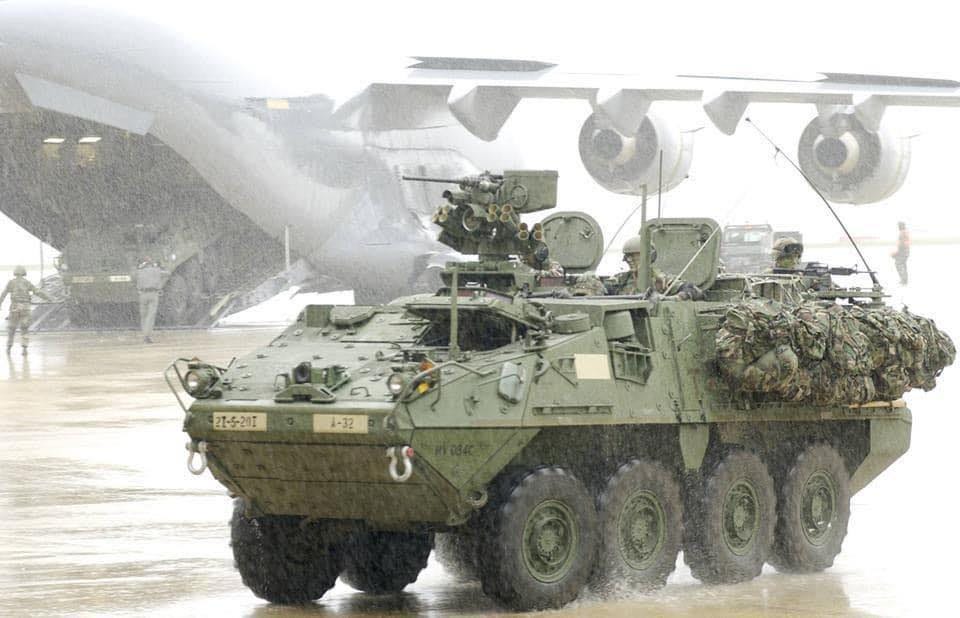
Today the US maintains 9 Stryker brigades, but not all of them would be part of the follow on forces. One is in South Korea, and removing it would probably not be diplomatically possible. Two are National Guard units that need more time to mobilize and would probably initially be kept for home defense. Another one is already in Germany.
This leaves up to 5 Stryker brigades, of with 2-3 would probably be air-lifted to Europe in the event of WW3. This would probably take 3-6 weeks.
Follow on Forces - Other
During the Follow on Forces period of WW3 in Europe either the 101st Airborne or 10th Mountain division would likely be sent via airlift. They would be similarly ill equipped for mechanised warfare, but would at least provide additional numbers.
Total Rapid Deployment and Follow on Forces
In the event that WW3 breaks out in Europe America would reinforce with the light units of its Rapid Deployment force. There would be 2x battalions in the ground within 24-48 hours and 4x manoeuvre brigades within a week. These forces would not be well suited to mechanised warfare, but they would provide a mass of soldiers at the critical early stages of the conflict.
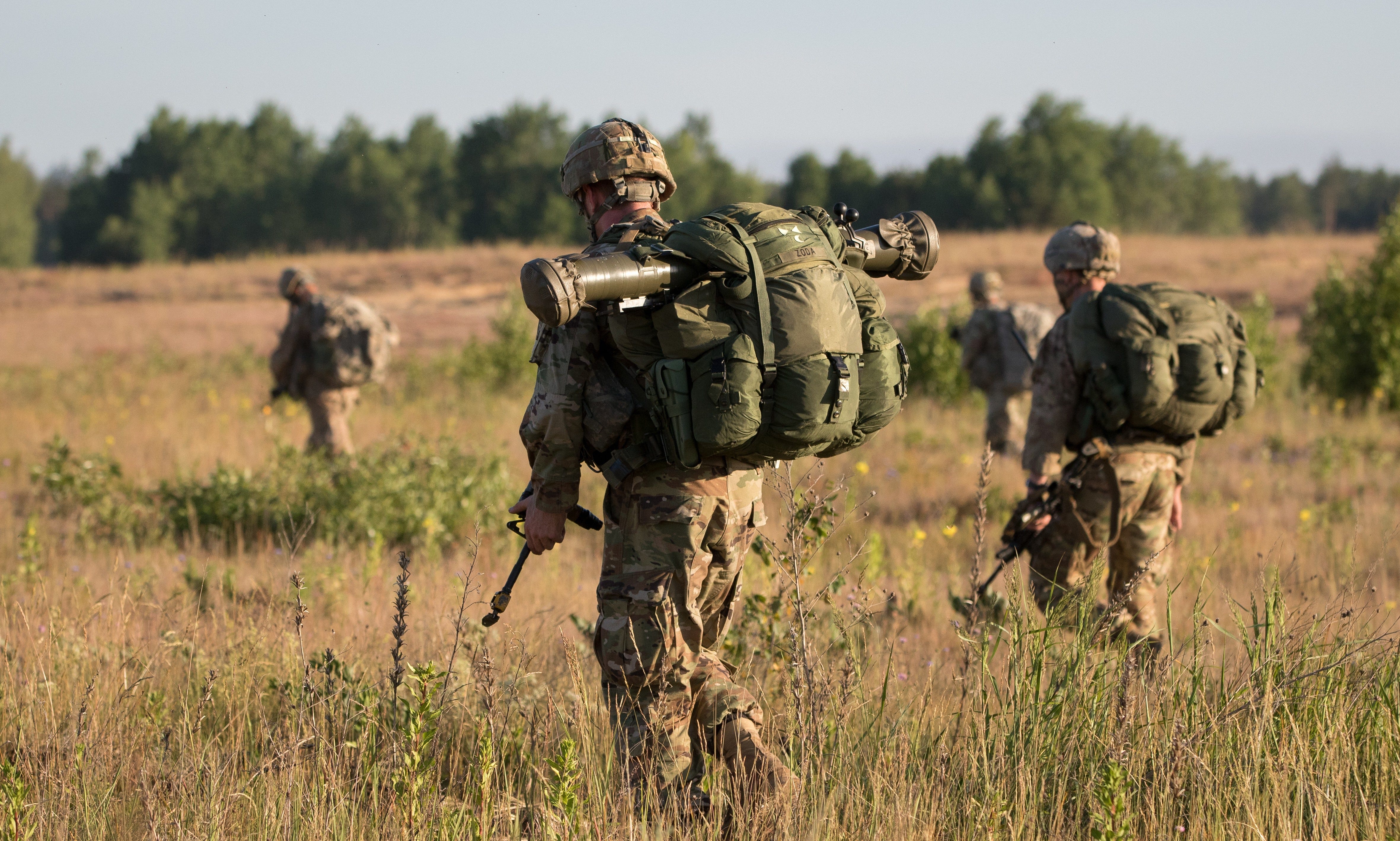
Heavier follow on forces of units with armored vehicles would arrive within 2-6 weeks, consisting of 4x armored brigades and probably 4x Stryker brigades. Another 3x light infantry brigades would probably arrive in the same timeframe from the 101st Airborne or 10th Mountain division.
Therefore US forces in Europe would be bolstered by about 15x manoeuvre brigades within the first 6 weeks.
Total Expeditionary Capacity
I have described this in other articles, but the best measure of America’s expeditionary capacity is that she maintains two deployable Corps HQs. A Corps can command 2-5 divisions or 6-15 manoeuvre brigades. Therefore you would expect the US military to be equipped to support a maximum of 30 manoeuvre brigades overseas. The active duty US Army has 31 manoeuvre brigades. These numbers are not a coincidence.

However, in the event of the kind of war requiring 2x Corps the US also has several unavoidable overseas commitments, needs a strategic reserve, would retain some units for home defence and needs to beef up training establishments. These needs could be met by either only deploying 1x Corps, or by calling up the entire National Guard (something it hasn’t done since WW2).
Conclusion: But What’s the Catch
The United States can deploy land combat power anywhere in the world on an astounding scale and speed. Using the example of WW3 breaking out in Europe, there should be 2x new battalions arriving in theatre within 24 hours, almost 2x brigades within 96 hours, and 4x brigades within a week. America could bring up to 15x additional manoeuvre brigades into theatre within 4-6 weeks.
This ability to globally deploy rapidly and at scale is unprecedented, not just in the world, but throughout history.

However, as we shall see in the next part, there are costs to this capability. In a literal sense it is costly, and this explains most of the size of the US military budget. Also, if you are optimised for expeditionary warfare you will be at best inefficient and at worst ineffective at continental warfare.
https://ukdefencejournal.org.uk/what-is-the-annual-running-cost-of-a-british-army-brigade/#:~:text=There%20is%20no%20’standard’%20brigade,c%C2%A3300%20million%20p.
I know this is surprising, but India actually did this in 1988 when they landed an airborne brigade in the Maldives to suppress a coup with 18 hours notice.