
Iran War: Interceptor Missiles
March 10, 2026

In the Iran war the US administration wants a quick war that leads to regime change as well as the destruction of Iran’s nuclear, missile and drone capabilities. They want to accomplish this without putting any boots on the ground, and therefore they have not prepositions troops in theatre.
As I explained on Friday, regime change and major concessions like ending weapons programs cannot be achieved through airpower alone. I think the possible outcomes are:
A cease-fire within the 2-6 weeks where both sides make some concessions and claim victory;
Escalation to a ground war (at least on a limited scale) because:
The United States runs out of interceptor missiles leaving the Gulf states and Israel unprotected from Iran's ballistic missiles and drones; or
Iran successfully closes the Straits of Hormuz.
This article will explain the complexities of those two possible escalation sources.
Iran’s Missiles
Over the last 20 years Iran has invested heavily in kamikaze drones, cruise missiles and ballistic missiles. This is part of a strategy to bleed US stocks of air defence munitions so Iran can force a ceasefire through strikes on US assets throughout the middle-east.
Terminology is important, and has not been well explained by most coverage of the war.
Terminology
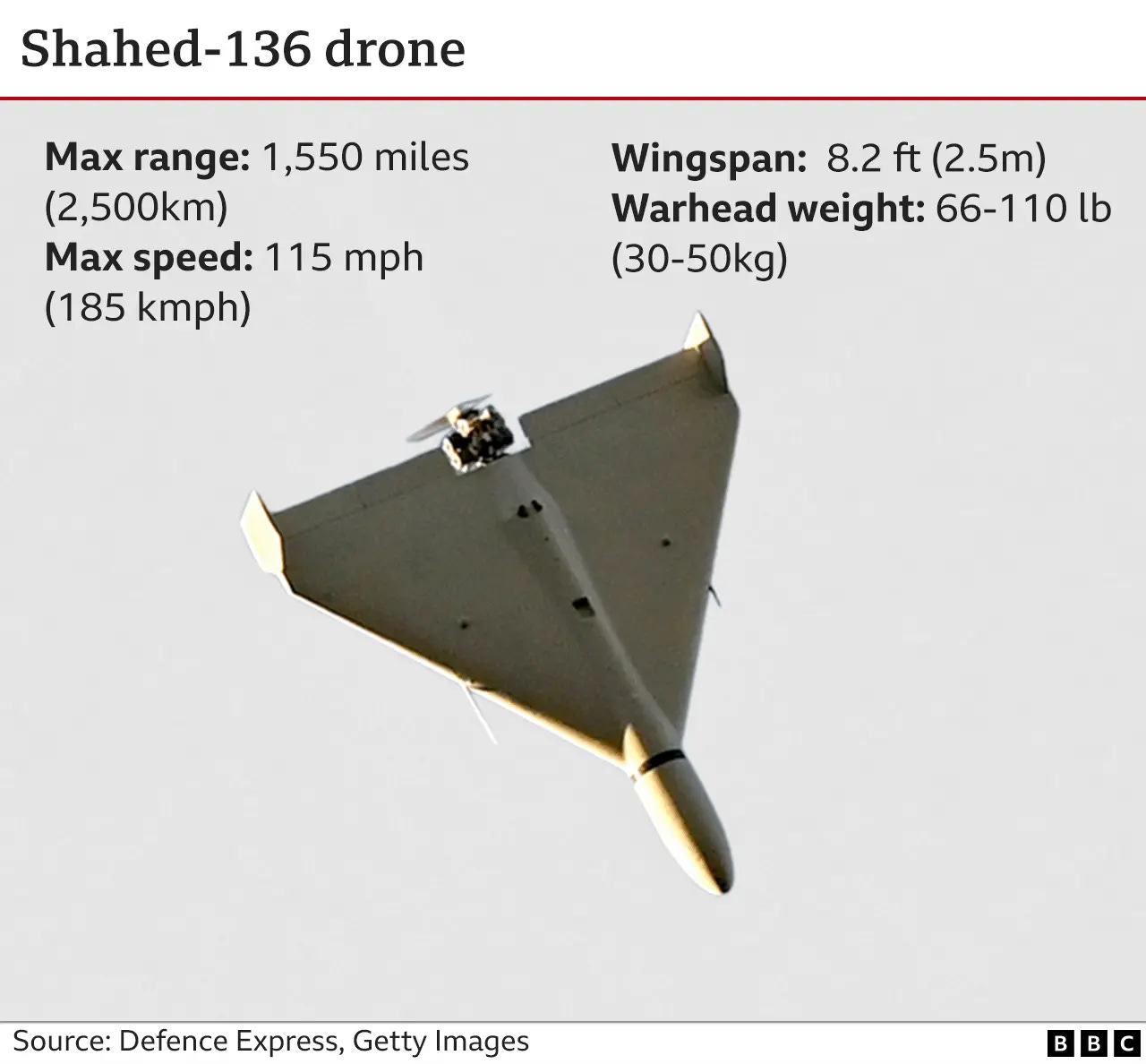
Kamikaze Drones
These are cheap 1 way drones with a warhead. They have a simple guidance system and fly well below the sound barrier, usually on a cheap lawnmower type engine.
They are best used as cannon fodder (to burn through air defence capacity) or for strikes against targets who have already had their air defences degraded. Their only real defence is that they are small, but this is surprisingly effective given most modern air defences were designed to shoot down much larger targets.
Most Kamikaze drones have a very simple guidance system. If the target is within a few km they can by remote controlled by a pilot (as we’ve seen in Ukraine). Longer range targets usually have guidance systems that land on a pre-designated location. This is most effective via GPS, but that can be jammed, so most of Iran’s Kamikaze drones use what’s called inertial navigation. The drone is given its exact location at launch, and the computer keeps track of the speed and direction after launch. These systems are not very accurate, so they have backup GPS guidance (often via the cell phone network) they rely on if it isn’t being jammed.
Kamikaze drones make up the bulk of Iran’s retaliatory munitions, particularly the Shahed drone.
Cruise Missiles
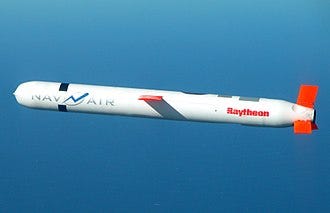
Cruise missile is a misnomer, because most of them are primarily powered by jet engines. The jet engine is used to give a much longer range than a missile, though it restricts most cruse missiles to subsonic speeds. They have a complex guidance system that flies close to the ground, what is called nape of the earth flying. After traveling to it’s rough target location uses sensors and AI to find and strike it’s pre-programmed target. In fact, AI was initially developed in the 1980s by the cruise missile development program.
Cruise missiles are hard to shoot down and very long range. However, they are complex and expensive. Iran has not heavily invested in cruise missiles, as they cannot be easily mass produced and are optimised for longer ranges than Iran’s needs.
The first cruise missile was the V1 buzzbomb, but today the most well known cruise missile it the American Tomahawk.
Ballistic Missiles
Ballistic missiles are rockets that use almost all their fuel getting up to high altitude, often into space to reach low earth orbit, then use gravity to crash down into their target at multiple times the speed of sound. For example, the Minuteman III missile reaches up to Mach 23 (17,500 mph) in it’s terminal decent.
The first ballistic missile was the V2, but today we mostly associate them with the cold war nuclear missiles held in underground silos or on missile submarines. However, ballistic missiles can also carry conventional payloads (for instance the V2 and Iran’s current ballistics).
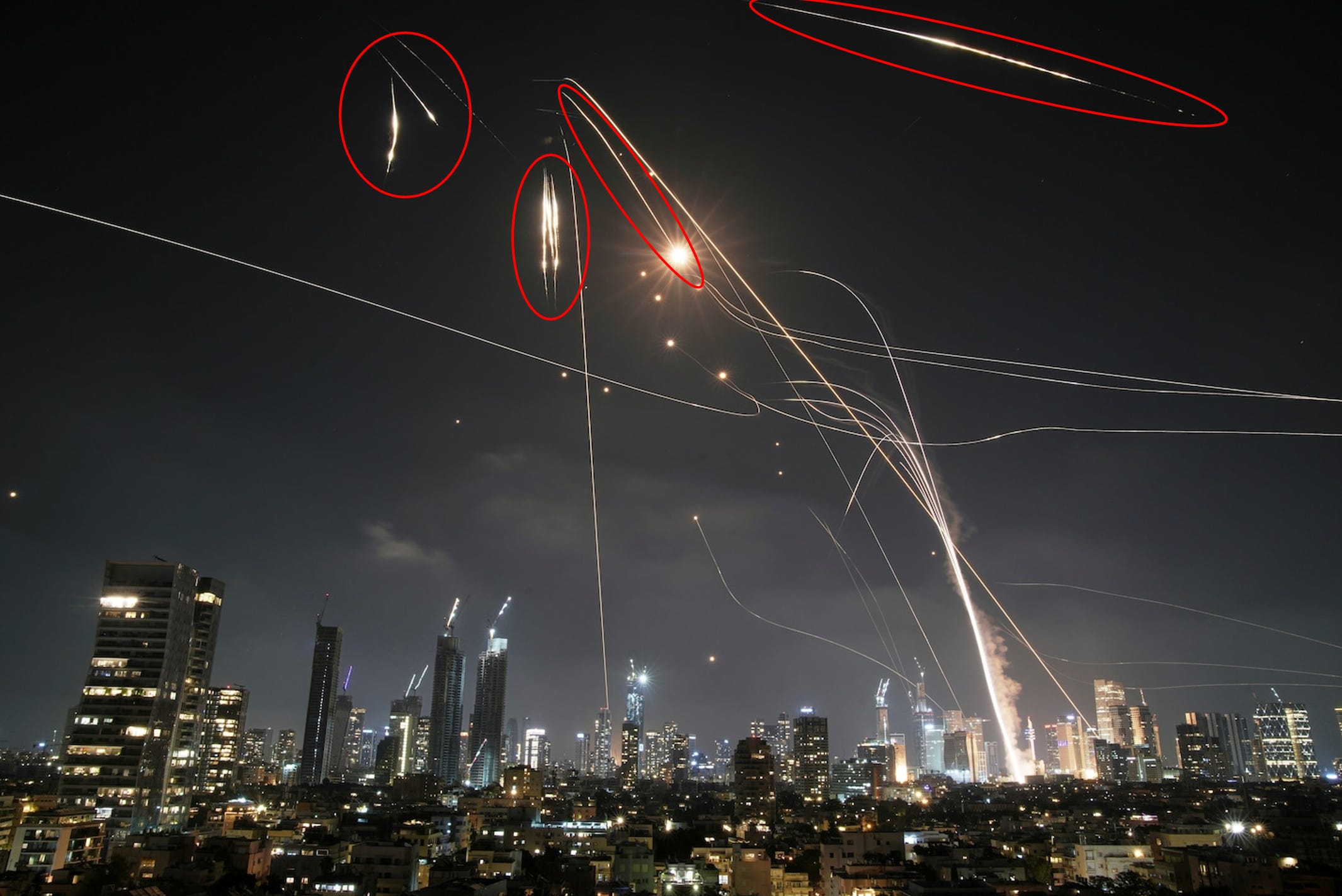
You can usually identify a ballistic missile in flight by the streak of light. They burn the air on re-entry to the atmosphere, like a spacecraft landing (marked in red in this photo).
Ballistic missiles are long range and highly survivable. Until about a decade ago there was no defence against ballistic missiles. Ronald Regan and George Bush were both ridiculed for investing money into developing an anti-ballistic missile defence system (dubbed Star Wars by the press).
The main issue with intercepting a ballistic missile is their speed and altitude. A powerful radar is needed to detect the missile in space far out enough to launch an interceptor. The interceptor needs to get up to a high enough altitude to strike the missile before it’s in the final terminal decent.
Most importantly, ballistic missiles travel faster than air-defence missiles, making a successful intercept very difficult. Most air-defence missiles are designed to get close to something like an aircraft and then explode, showering the target with shrapnel, pressure and hot gasses. This allows the air-defence missile to approach the target from almost any angle and likely have a kill so long as it can detonate close to the target.
Air defence missiles cannot chase a ballistic missile, even laterally, because they are so much slower. They cannot explode in proximity either, as the ballistic missile moves faster than the explosion. The air-defence missile needs to move to in front of the ballistic missile’s path and then detonate so that the ballistic missile rams the explosion.
Iran also heavily invested in ballistic missiles, though their greater cost and complexity means they have a lot less of them than Kamikaze drones.
Anti-Ship Missiles
Anti-ship missiles (ASMs)1 are guided missiles designed to hit ships. They can be a short range missiles, cruise missile, ballistic missiles or hypersonics. Iran has all four.
ASMs require a complex guidance system because they hit moving targets well beyond visual range (usually 35-200 km). Most of them use inertial navigation to reach a search zone, then switch on a radar to find and strike the target.
Iran’s ASMs will be discussed in more detail in the next post about the Straits of Hormuz.
Hypersonics
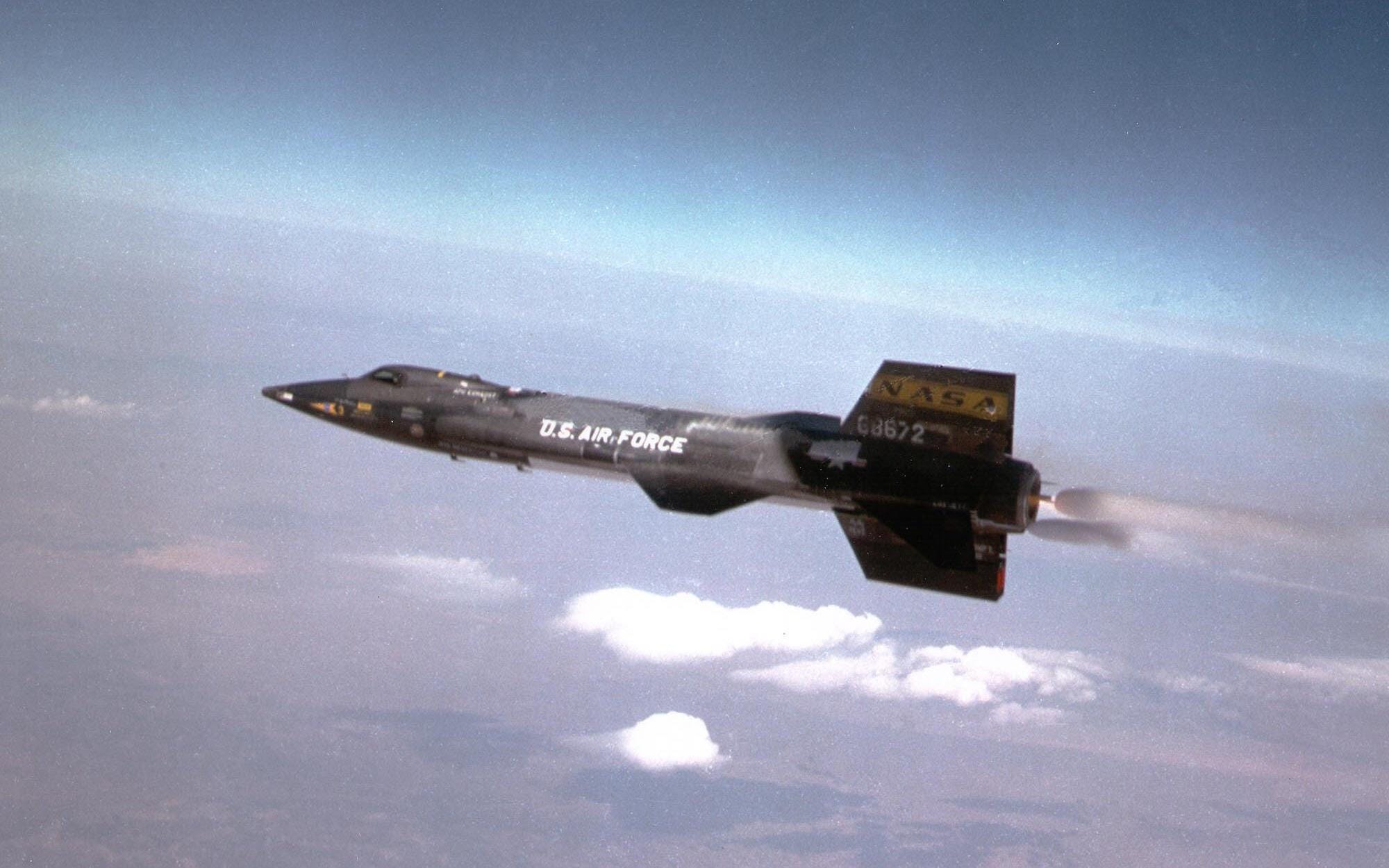
A hypersonic refers to any munition that exceeds Mach 5. A missile being hypersonic doesn’t say anything about its target, flight path or guidance system. The classification only relates to speed.
For example, arguably the X-15 (the rocket powered aircraft holding the manned speed record at Mach 6.7) is a hypersonic missile
Almost all ballistic missiles are hypersonics, because on anything but a very short range ballistic arc the missile will easily exceed Mach 5. If a ballistic missile has a guidance system for striking ships at sea then it is a ballistic, hypersonic ASM. It’s also possible for non-ballistic missiles to be hypersonic, though this takes up a lot of rocket propellant that otherwise would go to the warhead. Technically cruise missiles can be hypersonic, but it’s a huge engineering challenge to make the same munition ‘cruise’ and exceed Mach 5.
Summary on Terminology
Commentators throw around several terms in relation to Iran’s missiles and drones in a way that’s inherently confusing. Some of these terms describe the speed of the missile:

Some terms, like ASM, describe the target. Others, like cruise missile or ballistic missile, describe it’s flight path. To summarise, here are the most common terms for Iran’s missile and drone munitions by their flightpath, speed, target and cost:
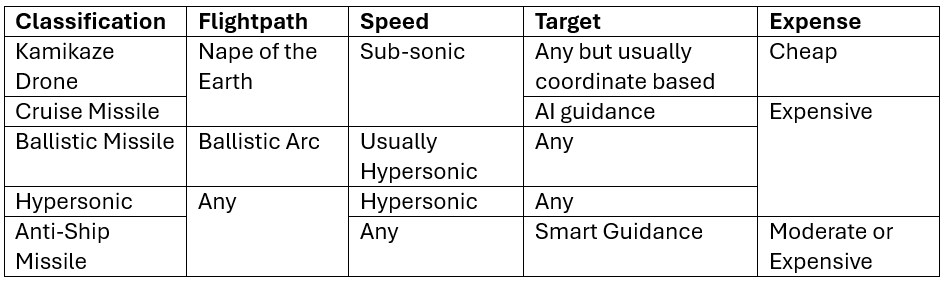
Iran’s Missile and Drone Strategy
Iran can use these munitions to inflict damage on US bases and the infrastructure of US allies through two strategies.
First, no air defence system effectively intercepts 100% of incoming drones and missiles. From the first day Iran was striking targets, such as the Tactical Operations Center that killed four US soldiers or destroying several high value US radar systems. Israel has also absorbed a number of ballistic missiles, mostly in Haifa and Tel Aviv. The term for these missed intercepts is ‘squirters’. The IDF reports a 99% intercept rate, but some Israeli media reports an 84% intercept rate.2 The gulf states report intercept rates in the 90s.
I should note these percentages are hotly contested, and small discrepancies in reported vs actual intercepts make a huge different. For instance, if Israel’s intercept rate is 98% instead of 99% then there are twice as many missiles impacting. If it drops down to 96% there are five times as many.
Therefore we can say the ‘squirter’ strategy has had some payoff, but it’s not a war winning approach. It’s impossible to be more precise than that using open source information.
The second approach is the Zap Brannigan killbot strategy: launch drones and missiles until the US and its allies run out of interceptor missiles.
If the interceptors are exhausted then US and her allies will only have point defences, which can only protect small high value targets and have a much lower intercept success rate.
To assess this strategy we need to know how many missiles and drones Iran can launch over the next few weeks (and maybe months), the number of interceptors needed to destroy an Iranian missile or drone, the stockpiles of interceptor missiles and the US’ willingness to deplete those stockpiles.
Iran’s Missile and Drone Launch Capacity
The general open source consensus is that Iran had about 2,500 ballistic missiles at the outset of the conflict, though estimates in mainstream sources range from under 2,000 to over 3,000. Israel claimed that by the end of the 12 day war Iran was down to 1,500 ballistic missiles and 200 launchers.
In late January 2026 Israeli intelligence claimed Iran had a stockpile of 80,000 Shahed drones, and the capacity to manufacture 400 per day in underground facilities. Most sources claim Iran launched 2,000 to 4,000 in the first 10 days of the conflict.
Claims for ballistic missile and drone launches are inconsistent. Here is a sampling to understand the data problem:
Almost every source shows Iranian ballistic missile launches declining in an inverse square, that is the number is cut in half every 2-3 days until it levels off on days 7-10
On the 5th day of the war (March 4th) CENTCOM claimed Iran had launched 500 ballistic missiles so far. Applying the inverse square model (which CENTCOM has also claimed as accurate) Iran would have peaked at below 200 ballistic missiles fired per day and fired a total of about 620 ballistic missiles by day 10 (March 9th).
The Jerusalem Post claims by the 10th day of the War (March 9th) Iran had launched 2,410 ballistic missiles, but the daily launch rate had collapsed by 92% from 720 per day to 60, and 60% of the launchers had been destroyed.3
Several social media OSINT compilers have produced charts like the one below. It shows by day 8 Iran had fired 905 ballistic missiles and 2,610 drones. If we apply the trend in this graph then by day 10 Iran would have launched about 965 ballistic missiles and at least 2,950 drones.
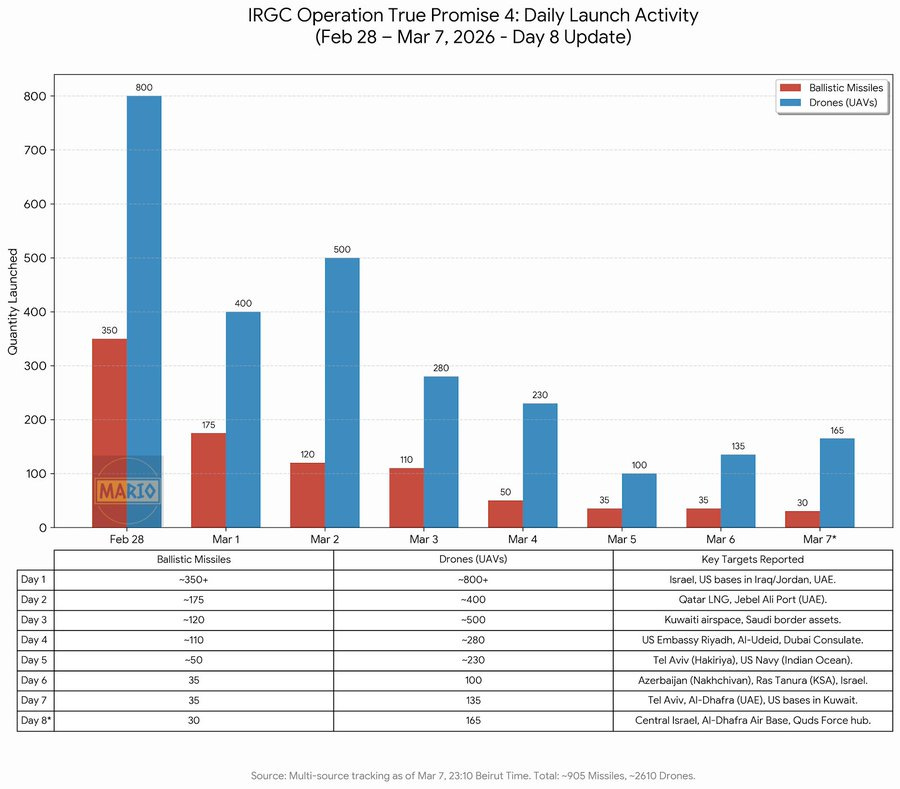
According to the Telegraph Iran fired off 380 ballistic missiles and 700 drones in the first two days of the war, and is on pace to exhaust her ballistic missile supply by March 16 - 28th.4 The Jerusalem Post’s numbers for the same timeframe are 520 ballistic missiles and 850 drones, and according to their trendline Iran will exhaust its ballistic missile supply by March 13th.
So depending on the source you select:
According the CENTCOM Iran is down to a handful of ballistic missile launches per day because the majority of their launchers were destroyed. Iran still has nearly 2,000 ballistic missiles in storage, but no way of launching more than a handful at a time.
According to the Jerusalem Post Iran has already launched 2,410 of its 2,500 ballistic missiles. The majority of the launchers have been destroyed, but the decline in numbers is because Iran is almost out of missiles.
According to the OSINT chart Iran still has about 1,500 ballistic missiles, but launches have declined by over 90%, so they must have lost most of their launchers
The Telegraph is somewhere between the Jerusalem Post and the OSINT chart.
The only thing the sources are consistent about is the trajectory of the drone war. Iran has only fired a small percentage of its Shahed drones, and Iran’s daily launch rate has either plateaued or fallen slower.
All of this is to say that you can construct any narrative you want from the available sources. While the numbers don’t vary enormously, that variation is enough to say that either Iran has stopped firing ballistic missiles because it is about to run out, to that very few have been fired, but most of the launchers have been destroyed.
Anyone who says they know what’s happening with greater certainty is selling something.

The US Supply of Interceptors
The United States has a number of missiles that can intercept ballistic missiles, and a broader set of weapons that can intercept drones at close range. We have some idea of pre-war stocks and production rates, but the exact number is classified.
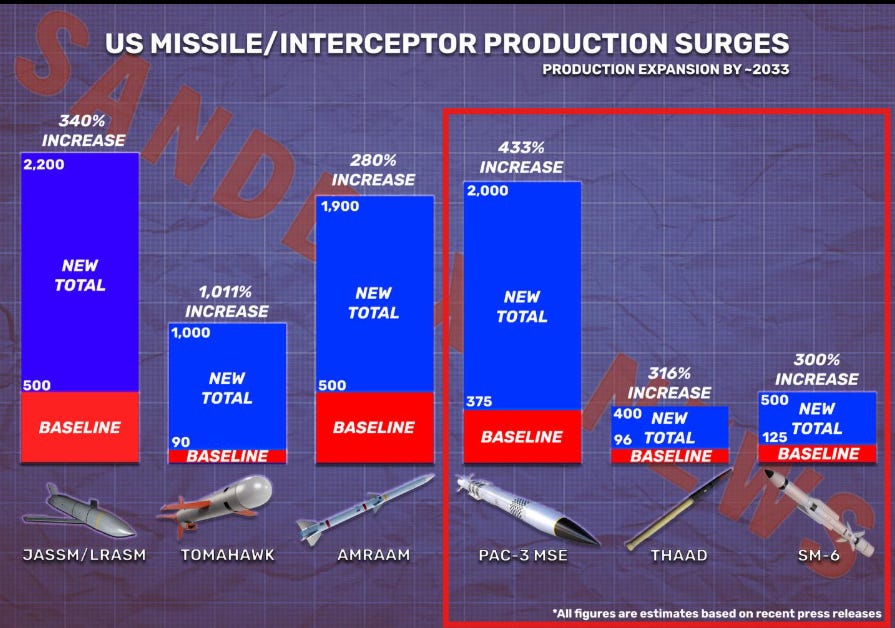
This chart made the rounds on twitter recently regarding the war with Iran. It’s very useful but needs some context.
The JASSM and Tomahawk are standoff munitions to allow ground attack despite the enemy having an intact air defence system. This is relevant to the US’ ability to strike Iran, but not in defending from incoming drones and missiles.
The “New Total” numbers (which some news stories call “production capacity”) is not the current capacity. They show the target production level by 2033 under a series of contracts that were mostly signed in January 2026. Given how defence procurement normally functions we can safely ignore these revised targets for this war (at least ooh God I hope so).
The table below shows weapons systems in the middle east that are capable of intercepting ballistic missiles, with the open source data on stockpiles and production.
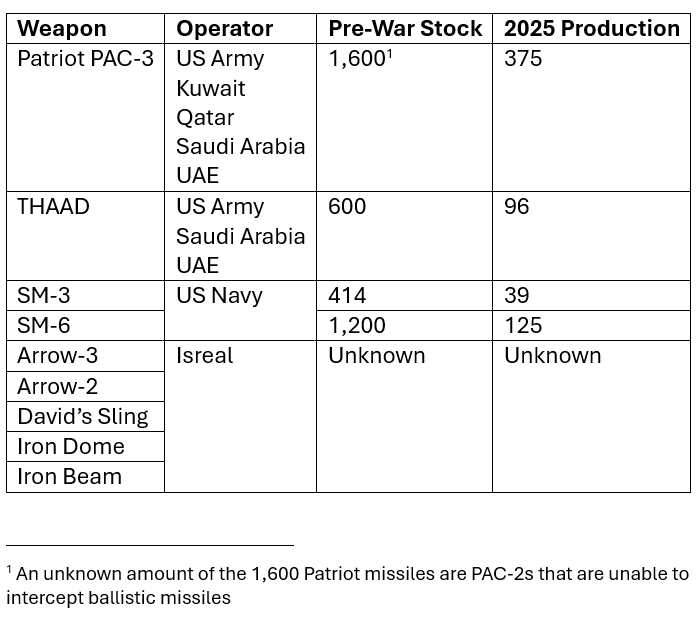
Here again he have a major data problem. Most of the ballistic missiles have been aimed at Israel, and there’s no good open sources for the numbers and production of any of Israel’s missiles.
For the Persian Gulf countries we can at least point to a maximum of 2,400 Patriot and THAAD missiles, as the USN missiles are for protecting their ships at sea in the Indian Ocean. However, an unknown number of the 1,600 Patriot missiles are PAC-2s, which can engage aircraft and drones, but cannot shoot down ballistic missiles.
Finally, all these anti-ballistic missile systems claim an interception success rate for the first missile fired of 84-99%. I have no idea what the real percentage is, but I know these numbers are inaccurate. Every video I have seen of ballistic missile interceptions shows a minimum of two missiles being fired for every one successful interception.
Therefore to estimate the remaining stockpile of ballistic missile interceptors we need to:
Determine the missile expenditure by:
Multiplying the number if Iranian ballistic missiles fired to date (Which is a number somewhere between 620 to 2,410)
By the number of missiles per successful intercept (which according to the manufacturers is 1.01 to 1.15, but according to every video I’ve seen is 2-4)
Subtract expenditure from the pre-war stockpile (Which is a wild guess of a number, especially as there are no estimates for Israel, where most of the missiles have been fired on).
So the equation is:
(random made up number) x (random made up number)
- (random made up number) =
I have no idea, and anyone who says they have greater certainty is selling you something.
US Stockpile Risk Tolerance
Finally, the US is never going to exhaust 100% of its stockpile of any weapon, because China and Russia exist.
To give a related example, the US started the war with a little over 4,000 Tomahawk missiles, and used about 400 in the first 72 hours. You might conclude the US used 10% of its available Tomahawks in that timeframe. However, the Joint Chiefs would publicly resign before they let the Tomahawk stockpile drop below 2,000, because launching a swarm of them is one of the best threats they can level against China and Russia. If you deplete that stockpile you are telling China if they take Taiwan the US has much more limited options to retaliate. The same logic applies to every munition in US inventory, from ICBMs to 5.56mm ball ammo.
There is a level for all these missile systems where the military will inform the President they are inviting foreign aggression and preventing proper defence of the homeland.
Where is that minimum level? I have no idea, and anyone who says……
Actually in this case I could probably do the staff estimate and come up with an educated guess, but both don’t want that information randomly on the internet and like not being prosecuted under the official secrets act.
Conclusion
Iran has a strategy of striking back at the US and her allies using missiles and drones. To understand this strategy you need to understand the terminology, as there are several terms being used incorrectly.
Iran can successfully land hits either by having a percentage of its missiles and drones get through the air defence system, or by exhausting stockpiles of air defence missiles.
Depending on the source, between >1 to 26% of Iran’s missiles and drones are getting through the air defence network and impacting on target. This spread of information makes the data meaningless.
Tracking whether Iran’s missile attrition strategy is working has similar problems. Depending on the source, Iran has either:
Nearly stopped firing ballistic missiles because it has nearly run out of them;
Nearly stopped firing ballistic missiles because it has run out of missiles and launchers;
Nearly stopped firing ballistic missiles because it is out of launchers, but still has over a thousand unusable missiles buried underground;
Has reached as long term steady state of daily launches as part of its plan for a long term attrition war.
When calculating the expenditure versus stockpiles of interceptor missiles it is impossible to accurately determine the size of the stockpile before the war or the number expended so far.
While this might be disappointing, this is a case where it is impossible for the public to know what is really happening. Iran has a strategy for striking back. They claim it is working. The US has a strategy to suppress Iran’s strikes. They claim it is working. All the data that can confirm who’s story is more accurate is currently classified.
This is similar to the problem of quantifying progress for the attritional war in Ukraine. Except the Ukraine war has had a glut of social media posts from soldiers that can at least be analyzed. Due to operational security policies and almost all the footage needing to come from the US Air Force (there are no soldiers in combat posting iphone videos), and the internet blackout in Iran we are stuck relying on montages of 1-4 second clips from CENTCOM.
The two most common abbreviations are ASM or AShM. I use ASM because it’s more aestheticly pleasing.
Superb compilation that is accessible to those who don't live and breathe this stuff. Well done.
It highlights the changing monetary calculus of power projection and the re-emerging prominence of the axiom that distance equals risk.
The conflict appears to be a tactical dead end with questionable strategic objectives.
This is a really helpful summary, thank you for putting it together!